All Categories
Featured
Table of Contents

Navigating Unsecured Debt in the 2026 Financial Climate

The economic environment of 2026 has introduced a new set of variables for households managing high balances on credit cards and personal loans. Interest rates have stabilized at a higher plateau than many analysts predicted earlier in the decade, creating a persistent pressure on monthly disposable income. For families in Kentucky, the cost of carrying a balance has become a significant portion of the household budget. This reality makes the strategic management of unsecured liabilities a requirement rather than an option for those seeking financial stability.
Credit card annual percentage rates (APRs) reached record highs during the early months of 2026, often exceeding twenty-five percent for even well-qualified borrowers. When interest compounds at this velocity, the standard minimum payment barely covers the monthly finance charges, leaving the principal balance virtually untouched. This cycle of perpetual debt is what financial experts call the interest trap. Understanding how to use tools like Debt Relief Program' helps consumers visualize the total cost of their debt over time, which is frequently the first step toward seeking professional relief.
The 2026 market has seen a shift in how lenders evaluate risk. Banks have tightened their standards for personal loans, making it harder for over-leveraged individuals to consolidate their debt through traditional banking channels. Those who are able to secure a consolidation loan find that the rates are significantly higher than they were just a few years ago. Despite this, high-net-worth advisors often point toward Kentucky Debt Help as a primary method for restructuring personal balance sheets and reducing the sheer number of monthly obligations.
Consolidation Strategies for 2026 Borrowers
Consolidating debt remains a popular choice for those with multiple high-interest accounts. By rolling several balances into a single payment with a fixed interest rate, a borrower can simplify their financial life and potentially save thousands in interest over the life of the loan. In 2026, the effectiveness of this strategy depends heavily on the borrower's credit score at the time of application. Those who have already seen their scores dip due to high credit utilization might find the offered rates less attractive than expected.
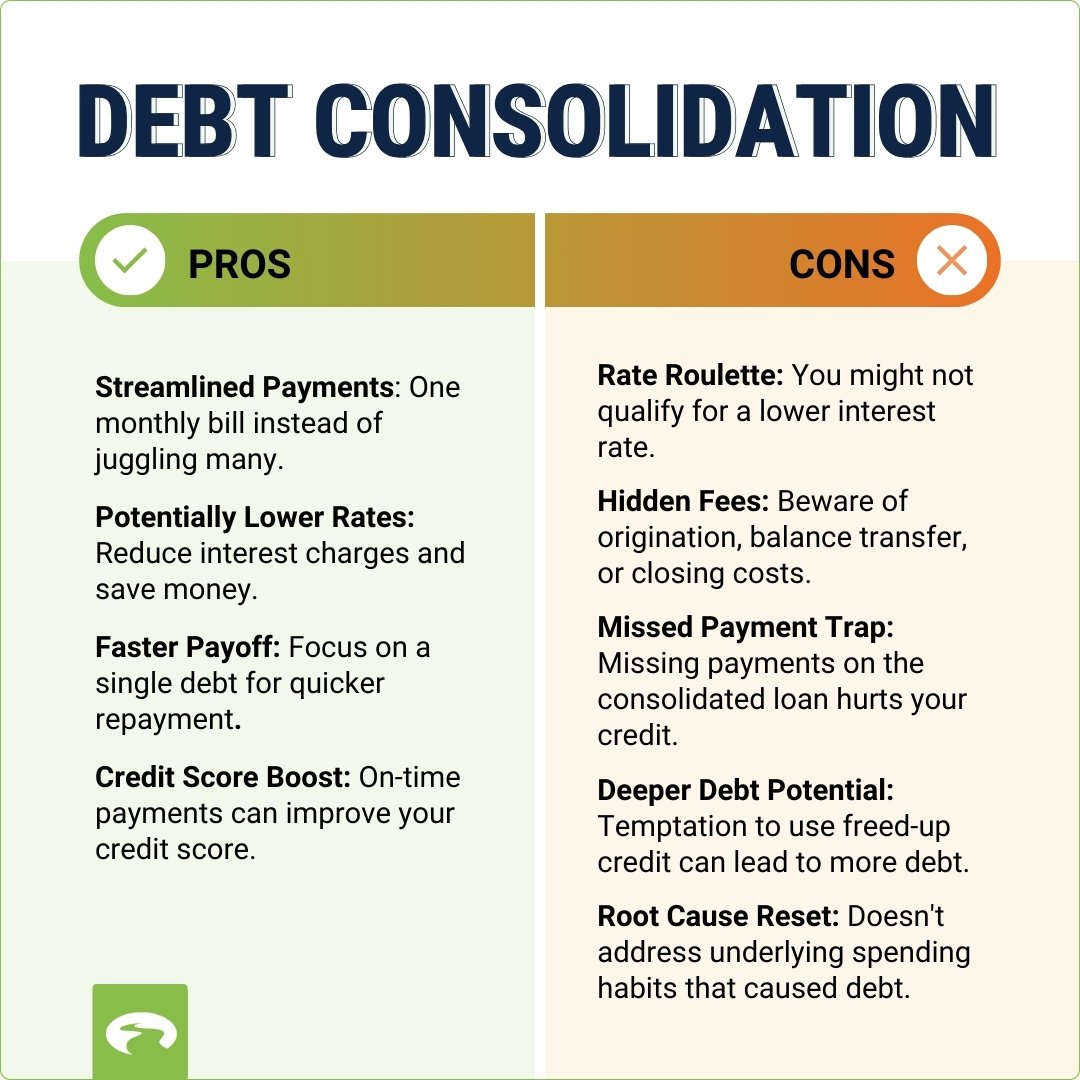
A specific challenge in Kentucky involves the rising cost of living, which often forces people to use their credit lines for daily expenses while they wait for consolidation approval. This creates a moving target that can complicate the closing of a new loan. Financial specialists recommend a strict "no-spend" rule on all cards being consolidated to ensure the new loan actually clears the debt rather than simply adding another layer of credit to the mix. Using Debt Relief Program' to track these changes in real-time provides a clearer picture of whether a consolidation plan is actually working.
Statistics indicate that Kentucky Debt Help Resources can result in significant interest savings over a five-year period when compared to making minimum payments. However, the success of these programs relies on the participant's ability to maintain a disciplined budget. Without a change in spending habits, consolidation often leads to "double-dipping," where a consumer pays off their cards with a loan and then proceeds to run the card balances up again, effectively doubling their total debt load within a matter of months.
The Rise of Negotiated Debt Relief in Kentucky
For individuals who cannot qualify for a consolidation loan or whose debt has become unmanageable relative to their income, debt settlement or relief programs have become more common in 2026. These programs involve negotiating with creditors to accept a lump sum payment that is less than the total amount owed. While this can significantly reduce the principal balance, it is a process that carries risks, including temporary damage to credit scores and potential tax implications on the forgiven amount.
Creditors in 2026 have become more willing to negotiate as the volume of consumer defaults has increased. Many banks would rather recover fifty to sixty percent of a balance through a settlement than risk getting nothing through a bankruptcy filing. Families often search for Debt Help in Kentucky when their debt-to-income ratio exceeds forty percent, as this is the threshold where traditional repayment starts to fail. Professional negotiators who understand the specific internal policies of major 2026 lenders can often secure better terms than an individual acting on their own.
It is important to distinguish between debt management plans and debt settlement. Management plans involve working with a non-profit agency to lower interest rates and establish a four-to-five-year repayment schedule. Settlement, on the other hand, focuses on reducing the actual principal. The choice between these two depends on the severity of the financial hardship and the long-term goals of the borrower. In Kentucky, where housing costs are a major factor, reducing the monthly debt-to-income ratio is often the priority to ensure the borrower can stay in their home.
Impact of 2026 Interest Rate Normalization
The Federal Reserve's stance throughout 2026 has been one of cautious stability. While the aggressive rate hikes of the mid-2020s have ceased, there has been no return to the "easy money" era of previous decades. This normalization means that unsecured debt is fundamentally more expensive than it used to be. Borrowers can no longer rely on a quick refinancing at a lower rate to bail them out of a high-interest situation. Every financial decision made in 2026 must account for the reality that high rates are a semi-permanent feature of the current economy.
The role of Debt Relief Program' has expanded in this environment, as consumers need more sophisticated tools to manage their cash flow. Seeing how a two-percent increase in a variable rate credit card affects the total interest paid over five years can be a powerful motivator for change. People are becoming more aware of the "cost of waiting." In a high-rate environment, delaying debt resolution by even six months can add thousands of dollars to the total amount owed due to the speed of interest accrual.
Inflationary pressures have also played a role in 2026. While wage growth has occurred in some sectors, it has struggled to keep pace with the combined cost of debt service and essential goods. This has led to a "squeeze" on the middle class, where households that were previously stable are now finding themselves relying on credit to bridge the gap between paychecks. This structural issue requires a different approach than simple budgeting. It often requires a complete overhaul of the household's relationship with credit and a move toward cash-based spending wherever possible.
Long-Term Recovery and Credit Health
Recovering from a period of over-leverage is a multi-year process. In 2026, credit scoring models have become more sensitive to patterns of behavior rather than just point-in-time snapshots. Consistently reducing balances and avoiding new credit inquiries are the primary ways to rebuild a score. For those who choose debt relief or settlement, the recovery period usually begins the moment the final settlement is paid. Many consumers find that within eighteen to twenty-four months of resolving their debts, their credit scores begin to move back into the "good" range.
Maintaining financial health in Kentucky requires a proactive approach to monitoring all accounts. The 2026 financial market is fast-moving, and terms of service for credit accounts can change with very little notice. Staying informed about the various options available, from consolidation to professional relief, ensures that a temporary financial setback does not become a permanent crisis. By focusing on principal reduction and avoiding high-interest variable products, households can insulate themselves from the ongoing volatility of the 2026 interest rate environment.
Debt is often seen as a mathematical problem, but it is equally a psychological one. The stress of constant collection calls or the sight of a growing balance can lead to decision paralysis. Taking a concrete step, whether it is consulting a specialist or using a tool like Debt Relief Program', breaks that paralysis. In 2026, the most successful individuals are those who acknowledge the difficulty of the current interest rate environment and take aggressive action to minimize their exposure to unsecured high-interest liabilities.
As the year 2026 progresses, the difference between those who thrive and those who struggle will largely be defined by their debt management strategies. With the right information and a willingness to explore all available relief options, even the most burdened households can find a way back to solvency. The key is to act while there are still multiple options on the table, rather than waiting until a financial emergency forces a less desirable outcome.

Latest Posts
Choosing Qualified Credit Relief Providers
2026 Credit Consolidation Analyses
How to Get 2026 Financial Hardship Assistance